John Fekner
In the 1970s, John Fekner became "anonymously known" for more than 300 site-specific/conceptual works made up of data, words, or symbols that he spray-painted throughout the five boroughs of New York City.
The "Warning Signs" project aimed to draw attention to the dangerous conditions that dominated New York City and its surroundings during the 1970s. In the spring of 1977, Fekner created signs with words on them using hand-cut stencils and spray paint.
This marked the beginning of his relentless crusade, addressing social and environmental issues. Initially, his messages could be seen on the streets of industrial areas in Queens and along the East River bridges, and later in the Bronx during the 1980s. All these areas were in dire need of construction, demolition, or reconstruction.
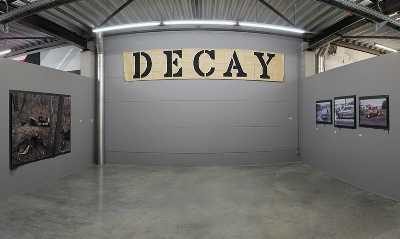
He painted structures and highlighted problems with the goal of raising awareness about the increasing neglect, urging city officials and local authorities to take responsibility and take action. His early projects, such as "Growth Decay, Industrial Fossil, Urban Decay, Decay/Abandoned, Instant This Instant That," and "The Remains of Industry," were not intended to last long.
They were considered successful when the prevailing conditions were eliminated or addressed. John Russell of the New York Times wrote about Fekner, stating that he is an artist who works not only in New York but also with it.
The city, in its more disenfranchised aspects, has been the raw material he has worked with since he got a space at the P.S.1 studio in Long Island City in 1976. He learned to view the vast, dilapidated building as "an aging person suddenly becoming aware of their life experiences." In Queens and the Bronx, he took to the streets, working in a way that brought long-forgotten places back to significance and urgency.
With just a few words (for example, "Decay" or "Broken Promises"), he introduced a piece of street theater into the troubled areas. Next to the Pulaski Bridge near the Queens-Midtown Tunnel, he blended the present with the past through a single statement that he spray-painted with a stencil (like "Wheels over Indian Trails"). What was considered vandalism elsewhere was perceived here as healing. People from the desolate parts of the city began to see more, feel more, think more, and emerge from their lethargy.
Despite the fact that Fekner's work has sometimes been extremely public, media-savvy, and technologically driven, he has managed to remain understated while being resolutely visionary.
Werke
Past Exhibitions
2018 (1 Ausstellung)
- 01.01.2018 – 05.05.2018 In Layers · Colab Gallery